Emile Henry Modern Classics Baker
As an Amazon Associate I earn from qualifying purchases.
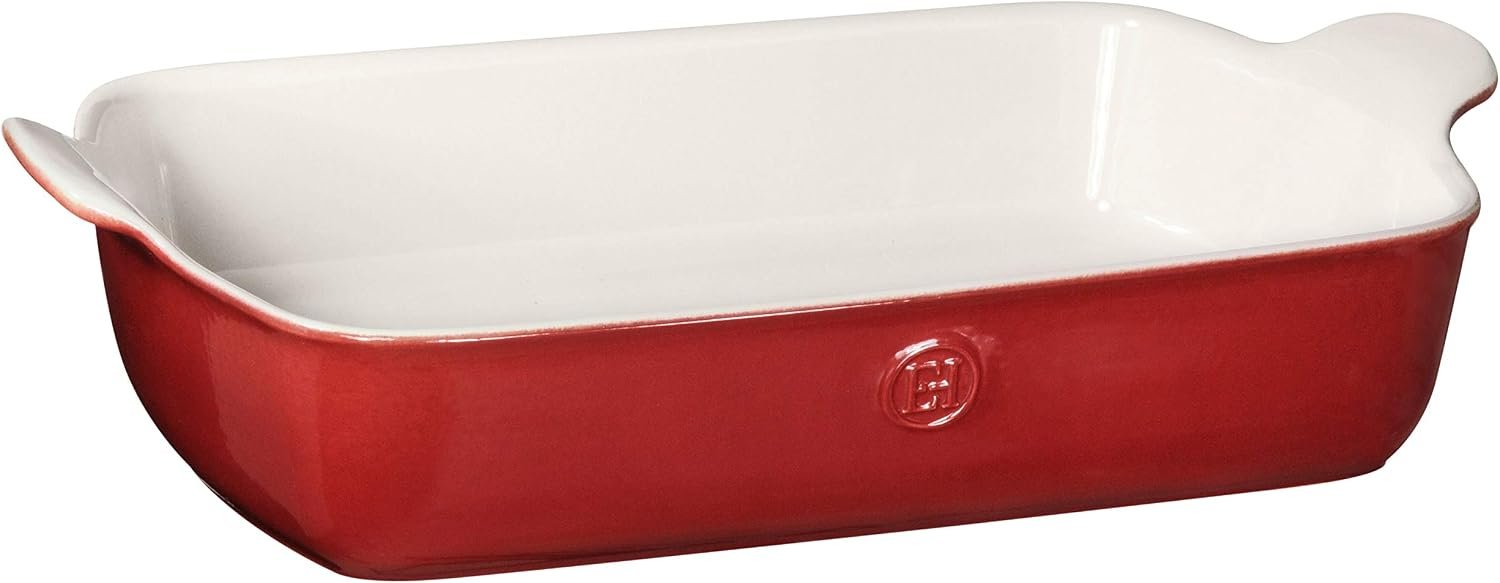
The Emile Henry Modern Classics Baker brings something rather appealing to everyday cooking: a substantial ceramic baking dish that looks just as comfortable on the dining table as it does in the oven.
Made in France from Burgundy clay, this rectangular baker combines traditional ceramic craftsmanship with a smooth glazed finish designed for regular use.
The Rouge colour is particularly attractive. Its rich red exterior contrasts with a light cream interior, giving the dish a warm, classic appearance that works beautifully in both modern and traditional kitchens.
But this isn’t simply decorative tableware.
The generous 13 x 9-inch format makes it useful for lasagne, casseroles, roasted vegetables, baked pasta and family desserts.
For anyone who enjoys preparing a meal in one dish and bringing it straight to the table, the Emile Henry offers an appealing combination of practicality and presentation.
However, ceramic bakeware has limitations. Weight, storage space and careful handling are all worth considering before replacing an ordinary metal baking pan.
Why It Works in a Kitchen
A good baking dish should be versatile enough to earn its cupboard space.
The Emile Henry Modern Classics Baker is designed for precisely that sort of everyday usefulness.
Its rectangular shape accommodates layered dishes particularly well. Lasagne sheets, vegetable gratins and baked pasta can be arranged neatly without leaving awkward gaps around a circular container.
The generous depth also provides room for sauces, cheese toppings and layered ingredients.
Unlike a lightweight disposable baking tray, the ceramic construction gives the dish a reassuringly substantial character.
Emile Henry uses high-resistance ceramic made from mineral-rich Burgundy clay.
The manufacturer describes this material as designed to distribute and retain heat evenly during cooking.
That makes it especially suitable for recipes that benefit from steady heat rather than rapid temperature changes.
There is another practical advantage.
Food can be prepared, cooked and served in the same attractive dish, reducing the number of separate containers needed for a family meal.
French Ceramic With a Classic Finish
Emile Henry has manufactured ceramic cookware in Marcigny, France, since 1850.
The Modern Classics collection reflects that long-established approach to ceramic production.
The Rouge finish gives this particular baker considerable visual character.
Its glossy red exterior feels warmer and more inviting than plain stainless steel, while the cream interior provides a pleasing contrast when food is served.
The glazed surface is designed to resist scratches and everyday staining.
That is useful for dishes containing tomato sauces, cheese and other ingredients that can leave more porous materials looking tired.
The integrated side handles also contribute to the design.
Rather than attaching separate metal fittings, Emile Henry incorporates the handles into the ceramic form.
This creates a clean appearance while providing places to grip when moving the dish.
It is a practical design, although the handles become hot during cooking and require proper oven gloves.
The overall impression is of something intended to remain useful for years rather than be replaced when the kitchen is redecorated.
What It Feels Like to Use
Ceramic bakeware has a different physical character from thin metal trays.
The Emile Henry’s smooth glazed surface, substantial walls and solid construction give it a reassuringly weighty feel.
The broad rectangular shape also makes it easy to arrange ingredients neatly.
For a vegetable gratin, sliced potatoes or other vegetables can be layered evenly before adding cream, seasoning and a topping.
For baked pasta, the relatively straight sides help contain the sauce and prevent ingredients from spreading across an unnecessarily large surface.
There is something satisfying about an attractive dish that doesn’t need transferring into another serving bowl.
Once the food has cooked, the baker can be placed on a suitable heatproof trivet in the centre of the dining table.
The Rouge glaze provides enough colour to make even a simple family casserole look inviting.
Ceramic also retains heat, helping food remain warm during serving.
Of course, heat retention works both ways. The dish stays hot after leaving the oven, so careful handling remains essential.
Practical for Everyday Baking
The Modern Classics Baker is particularly useful for meals that spend most of their cooking time in the oven.
Lasagne is an obvious example.
The rectangular shape suits layered pasta, while the ceramic construction provides steady surrounding heat.
Vegetable gratins are another natural choice.
Potatoes, cauliflower, courgettes and other vegetables can be prepared with sauces or seasonings and baked until tender.
The dish also works for fruit crumbles, brownies and other oven-baked desserts.
Emile Henry rates its high-resistance ceramic for oven use up to 500°F, subject to the manufacturer’s instructions.
The material is also suitable for microwave use and can withstand substantial temperature changes, including movement from freezer to oven under the manufacturer’s stated conditions.
That flexibility is useful for preparing meals ahead of time.
A family casserole can be assembled, stored appropriately and cooked when required without needing to transfer the ingredients into another container.
The important consideration is to follow Emile Henry’s specific care guidance rather than assuming every ceramic dish can handle the same treatment.
A More Attractive Way to Serve
One reason to choose ceramic rather than metal bakeware is the way it looks on the table.
A conventional aluminium baking pan may cook perfectly well, but it rarely brings much visual warmth to a meal.
The Emile Henry is different.
Its deep red exterior, softly rounded corners and contrasting interior give it the appearance of proper serving ware.
It sits comfortably alongside wooden boards, linen napkins and simple white plates.
For autumn and winter entertaining, the warm colour works particularly well with rustic bread, roasted vegetables and generously portioned casseroles.
It also complements other substantial cookware.
Our guide to the Le Creuset 5.5-Quart Round Dutch Oven explores another French-made piece that combines cooking performance with attractive table presentation.
The Le Creuset is better suited to stovetop cooking, braising and covered slow-cooked meals.
The Emile Henry baker concentrates on oven dishes that benefit from a broad, open rectangular shape.
Both reflect the appeal of cookware designed to remain part of the dining experience.
Cleaning and Everyday Care
The glazed surface makes the Emile Henry relatively straightforward to clean after ordinary cooking.
The manufacturer specifies that the Modern Classics ceramic is dishwasher safe.
That is welcome for anyone who enjoys cooking but doesn’t particularly enjoy washing large dishes afterwards.
For everyday care, warm water, ordinary dish detergent and a non-abrasive sponge are usually sensible starting points.
Stubborn baked-on food may benefit from soaking before cleaning.
Although the glaze is scratch-resistant, gentle utensils remain a thoughtful choice when serving.
Natural wooden utensils can be particularly suitable.
Our article on the Zulay Teak Wooden Utensil Set explores how smooth wooden serving tools can work with ceramic and other cookware surfaces.
The combination also looks attractive when serving directly at the table.
The Drawbacks
The Emile Henry Modern Classics Baker is an attractive and versatile piece of ceramic bakeware, but it isn’t necessarily the right choice for every kitchen.
Its traditional material brings several practical compromises that deserve consideration.
Ceramic Is Heavier Than Metal
The most noticeable difference is weight.
Ceramic requires thicker walls than a typical pressed-metal baking pan, making it more substantial to lift and carry.
That extra weight can feel reassuring when the dish is sitting securely on the worktop.
However, lifting a full casserole from a hot oven requires more care.
Once the dish contains several portions of food, the combined weight can become considerable.
Anyone with reduced grip strength, wrist discomfort or difficulty lifting heavy cookware may find a lightweight metal pan easier to manage.
The integrated handles provide useful gripping points, but they don’t remove the need for steady, two-handed handling.
Chipping and Breakage Remain Possible
Emile Henry describes its high-resistance ceramic as particularly durable and resistant to ordinary mechanical shocks.
Nevertheless, ceramic isn’t unbreakable.
A hard impact against a stone countertop, ceramic sink or tiled floor can damage an edge or corner.
The handles are particularly important because they are part of the ceramic structure rather than separately replaceable components.
A damaged handle may make the entire dish unsuitable for safe use.
Careful storage is sensible, especially when several heavy pieces of cookware share one cupboard.
Avoid allowing other pans or heavy utensils to strike the glazed edges.
It Isn’t Intended for Direct Stovetop Cooking
The Modern Classics rectangular baker is designed primarily for oven and microwave use.
It should not be treated as a conventional stovetop pan.
That means recipes requiring meat to be browned over a burner before going into the oven will need a separate skillet or saucepan.
For example, preparing a meat-based lasagne may involve cooking the sauce in another pan before assembling the dish.
Someone wanting one piece of cookware capable of browning, simmering and oven cooking may prefer a suitable Dutch oven or other stovetop-compatible cookware.
The Emile Henry performs a more focused role.
Ceramic Behaves Differently From Metal Bakeware
Ceramic and metal conduct heat differently.
A thin metal baking pan generally responds more quickly when oven temperatures change.
Ceramic typically heats more gradually and retains warmth for longer.
This can be useful for casseroles and gratins, but certain recipes may require adjustments.
Baked goods that depend on rapid heating or a particularly crisp bottom may behave differently from the same recipe prepared in metal.
Anyone moving from metal bakeware should be prepared to monitor cooking results rather than assuming every recipe will perform identically.
The material isn’t automatically better for every type of baking.
The Glaze Requires Sensible Care
Although the finish is designed for regular use, keeping an attractive coloured glaze looking its best requires some consideration.
Abrasive cleaning tools should be avoided where possible.
Metal utensils may also leave marks on some ceramic surfaces, even when the glaze itself remains intact.
Repeated rough handling can eventually affect the appearance.
The Rouge finish is particularly noticeable, so chips or damage around the edges may be more obvious than on plain metal bakeware.
If maintaining a pristine appearance matters to you, this is worth remembering.
Storage Space Can Be an Issue
A rectangular baker is useful when cooking, but its broad shape requires cupboard or shelf space.
It cannot be folded or reduced in size.
The substantial ceramic construction also makes it less convenient to stack beneath heavy pots and pans.
If several baking dishes are already stored in the kitchen, adding another similarly sized piece may create unnecessary duplication.
Measure your cupboard space and consider whether the 13 x 9-inch format fills a genuine gap in your cooking equipment.
It Doesn’t Include a Lid
This particular Modern Classics rectangular baker is an open baking dish.
There is no fitted lid included.
That makes it suitable for lasagne, gratins and baked dishes where the top is intended to brown.
However, recipes requiring covered cooking may need suitable foil or another oven-safe covering.
Storing leftovers may also require a separate food-safe cover or transferring them into another container.
Anyone expecting a complete covered casserole dish should be aware of this difference.
The Warranty Doesn’t Cover Every Accident
Emile Henry advertises a ten-year warranty against manufacturing defects under normal domestic use.
That is encouraging, but it shouldn’t be confused with protection against every type of accidental damage.
Breakage caused by dropping the dish or using it improperly is not automatically covered.
It’s sensible to read the current warranty conditions and follow the manufacturer’s care instructions.
The durability of the ceramic is reassuring, but careful ownership remains part of the arrangement.
Who It Suits Best
The Emile Henry Modern Classics Baker is particularly suited to people who regularly prepare oven-baked meals and appreciate attractive cookware.
It makes sense for families who enjoy lasagne, gratins, baked pasta and roasted vegetables.
It should also appeal to anyone who likes serving directly from the cooking dish rather than transferring food into separate tableware.
The Rouge finish is especially attractive in kitchens with natural wood, warm neutrals, cream cabinetry or classic decorative details.
However, someone who needs lightweight bakeware, regularly cooks directly on the stovetop or has very limited storage may prefer a different material.
For more carefully chosen cookware, serving pieces and useful kitchen equipment, explore our Kitchen collection.
Is It Worth the Kitchen Space?
The Emile Henry Modern Classics Baker makes a convincing case for itself through traditional craftsmanship, practical versatility and attractive design.
Its French-made ceramic construction provides a substantial baking dish suitable for many everyday meals.
The smooth Rouge glaze gives it enough character to serve directly at the table, while its straightforward rectangular shape makes it useful throughout the year.
Nevertheless, its weight, vulnerability to hard impacts and inability to work directly on the stovetop are genuine limitations.
For someone who mainly wants the lightest possible baking tray, a conventional metal pan may be more practical.
But for a kitchen where casseroles, baked pasta and relaxed family meals are part of the regular routine, the Emile Henry offers something more considered.
It’s an appealing choice for anyone who values cookware that feels substantial, looks attractive and performs a useful role beyond simply holding food in the oven.
As an Amazon Associate I earn from qualifying purchases.