The cast-iron skillet that earns its place
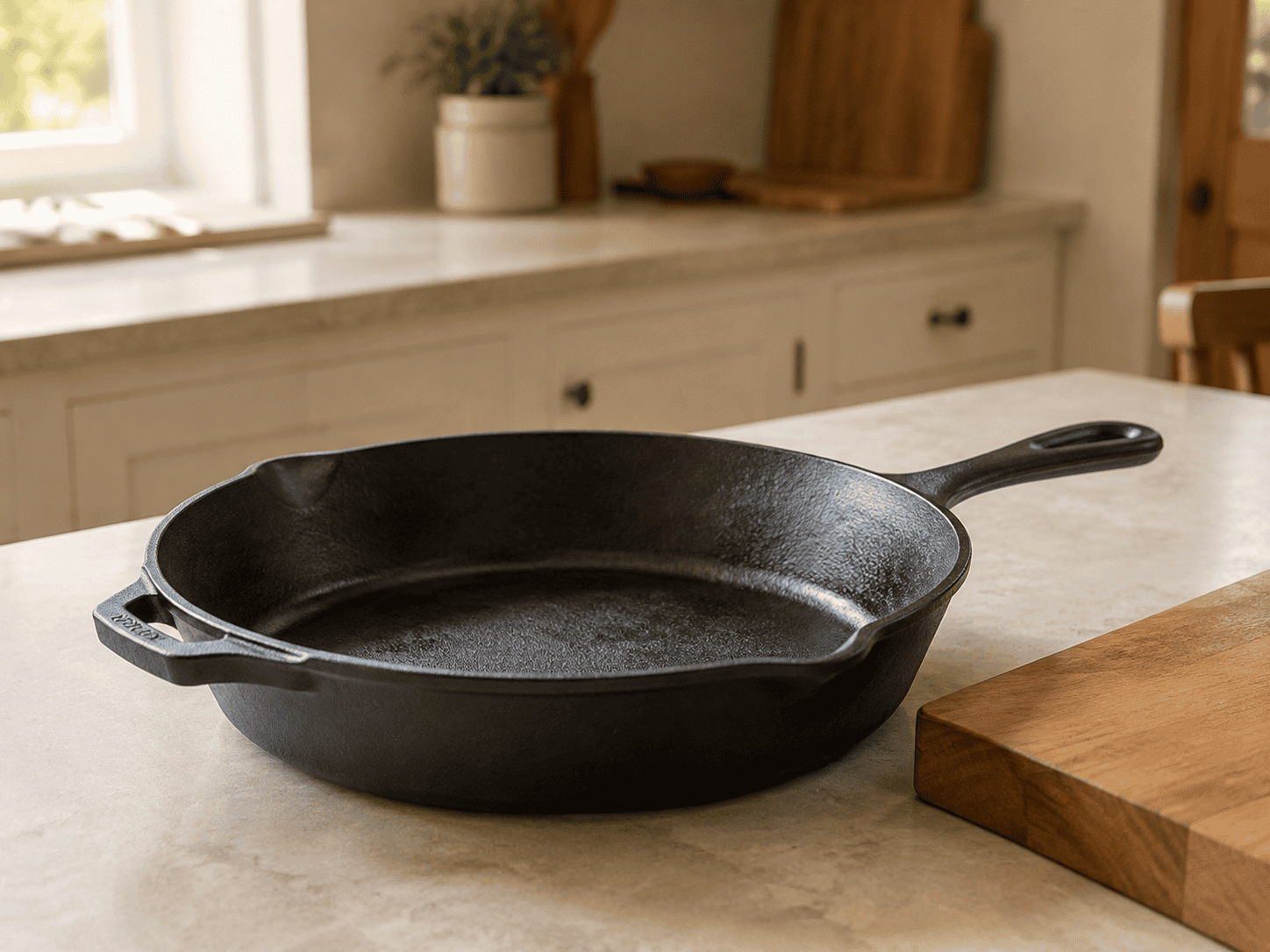
Some pans are bought for a particular recipe and slowly disappear to the back of a cupboard. A good cast-iron skillet does the opposite. It begins rather rough and demanding, then becomes smoother, darker and more useful with every meal. The Lodge 12-inch skillet is heavy, plain and built for years of browning, baking and sizzling—provided you are comfortable with the care it asks in return.
As an Amazon Associate, I earn from qualifying purchases.
Why it earns its place
The first thing you notice is the weight. At 7.69 pounds before food is added, the pan sits firmly on the burner and feels almost anchored in place. Its dark cooking surface is finely pebbled when new rather than glassy smooth, but that texture settles with regular seasoning and use.
Give the skillet a few minutes to warm and that stored heat becomes its quiet strength. Cornbread develops crisp, golden edges. Vegetables brown rather than wilt, and meat gains a deep crust without the temperature collapsing when it touches the pan. The 12-inch cooking area also gives ingredients enough room to spread out instead of steaming in a crowd.
What it is like to live with
It moves comfortably from stovetop to oven, which makes it particularly useful for dishes that begin with browning and finish with gentle, even heat. The short helper handle matters more than it first appears: with a folded towel or proper mitts, two-handed lifting feels controlled rather than precarious. There is no coating to baby, and metal utensils will not trouble the surface.
Cleaning becomes a small rhythm rather than a chore: wash it while it is still slightly warm, dry it thoroughly, then wipe on the thinnest film of oil. The surface should feel dry and satiny, never greasy. With steady care, food releases more readily and the pan takes on the deep, soft sheen of something properly used.
Drawbacks to know
The weight is not a charming little quirk. At nearly eight pounds empty, it can be awkward for anyone with limited hand, wrist or shoulder strength, and a full skillet is heavier still. Both handles become fiercely hot in the oven and stay hot for longer than you may expect. It also takes time to preheat, so it is not the pan to reach for when you want one fried egg in three minutes.
It also asks for more attention than stainless steel. Leave it damp and rust can appear; leave a thick coat of oil and the surface may turn sticky. Long, acidic simmers—particularly tomato sauces—can disturb young seasoning and occasionally lend food a metallic note. The factory-seasoned finish is usable immediately, but it may feel rougher and release food less easily than a pan that has been cooked with for several months.
Who it suits
Choose it if you enjoy deeply browned food, cook for several people and do not mind a little maintenance. It is especially satisfying for someone who likes possessions that improve through use rather than remaining pristine. If low weight, instant heating or effortless washing matters more, a good stainless-steel or lighter carbon-steel pan may suit you better.
As an Amazon Associate I earn from qualifying purchases.