BLACK+DECKER BPWM16W Portable Washer
As an Amazon Associate I earn from qualifying purchases.
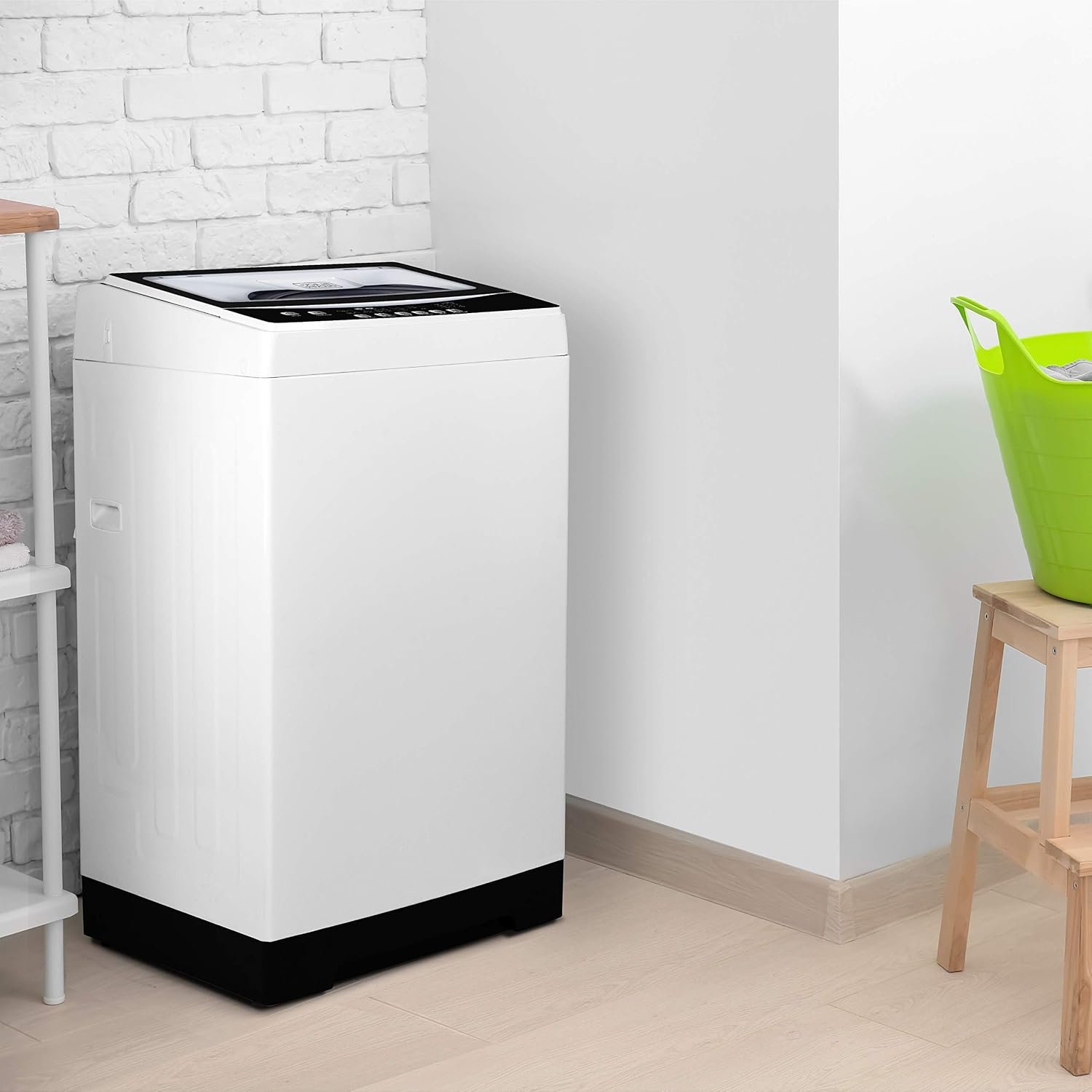
The BLACK+DECKER BPWM16W Portable Washer is designed for homes where a conventional full-size washing machine either will not fit or simply is not practical.
Rather than being a tiny countertop gadget for washing one or two items, this is a proper top-loading washing machine with an 11 lb laundry capacity, six wash programs and its own wash, rinse and spin functions. The difference is that it can connect to a suitable sink and be moved when it is not needed.
That makes it particularly interesting for apartments, small homes, utility rooms, RVs and other spaces where permanent plumbing for a full-size machine may not be available.
Why it works in a laundry room
The main attraction is that the BPWM16W gives you much of the normal washing-machine experience without demanding the footprint or permanent installation of a large appliance.
BLACK+DECKER rates the stainless-steel tub at 1.6 cu. ft., with capacity for loads weighing up to 11 lb.
That is obviously smaller than a family-sized washing machine, but it is enough for everyday clothing, underwear, towels, baby clothes and other modest loads.
For one or two people, that can be far more useful than allowing dirty laundry to accumulate until there is enough to justify a trip to a laundromat.
The top-loading design also keeps the footprint fairly compact. BLACK+DECKER lists the machine at approximately 21.3 inches wide, 21.7 inches deep and 36.6 inches high.
It is therefore a real appliance rather than something you would sit on a worktop, but it can occupy considerably less space than many conventional washers.
Six wash programs for different loads
The control panel gives you six programmes:
Normal, Heavy, Delicate, Quick, Bulky and Spin Only.
That selection covers most of the loads someone would realistically put through a compact washer.
Normal handles everyday clothing, while Heavy is there for more demanding loads. Delicate provides a gentler option, Quick can deal with smaller loads when you do not need a long cycle, and Bulky gives larger items their own setting.
Spin Only is useful when something has already been washed or rinsed and simply needs more water removed before drying.
BLACK+DECKER states that wash times can range from around 15 to 59 minutes, depending on the selected programme.
There are also three water-level settings, allowing the amount of water to be better matched to the size of the load rather than filling the tub to the same level every time.
What it feels like to use
Operation is much closer to a normal washing machine than the word “portable” might suggest.
You load the clothes from the top, add the appropriate detergent, select the programme and water level from the control panel and start the cycle.
An LED display shows the controls and remaining cycle time, while the machine handles the washing, rinsing and spinning automatically.
BLACK+DECKER specifies high-efficiency detergent for this washer. The manufacturer also describes the current BPWM16W as intended for cold-water operation, so there is no need to approach it like a traditional washer where you routinely select several wash temperatures.
There is also a built-in lint filter.
Rather than replacing disposable filters, BLACK+DECKER recommends cleaning this filter periodically, around once a month depending on use.
Those little details help the machine feel like a genuine long-term laundry appliance rather than a temporary camping gadget.
Connecting it to a sink
The portability comes largely from the water connection.
Instead of requiring a permanently plumbed washing-machine valve, the BPWM16W can be connected to a suitable faucet using its quick-connect arrangement. A drain hose then carries the wastewater away.
That can be particularly useful in a kitchen, bathroom, utility area or apartment where a washing machine was never originally planned.
When washing is finished, the connection can be removed and the machine moved away if necessary.
That flexibility is one of the biggest differences between this and a conventional washer.
It also means you need to think about where the machine will actually be used before buying it. You need access to a compatible water source, a suitable place for the drain hose and a normal 120V electrical supply.
Portable does not mean lightweight
The BPWM16W has two rollers and side handles to help with movement.
Those are useful, because the washer itself weighs approximately 70.5 lb.
So “portable” should not be interpreted as something you casually pick up and carry from room to room.
It is better thought of as movable.
You can tilt it onto its rollers and reposition it, perhaps keeping it against a wall or in a cupboard area when it is not connected. But it is still a substantial appliance containing a motor, pump and steel wash tub.
That weight is not necessarily a disadvantage while it is actually running. A washing machine needs some mass and stability during the spin cycle.
Useful where a full-size machine does not fit
A compact washer makes most sense when space is the problem rather than washing itself.
An apartment may have room for a small appliance but no dedicated laundry connections.
A converted room or small utility area may have a sink but not the space for a conventional washer and dryer beside it.
An RV or mobile home may need a machine that can be repositioned rather than permanently taking up valuable floor space.
The BPWM16W addresses those situations without reducing the washing process to hand-agitating clothes in a plastic tub.
The automatic rinse and spin cycles are particularly important.
Washing clothes by hand is one thing. Removing enough water afterwards to make drying practical is often the more frustrating part. A powered spin cycle takes care of much of that work.
A practical size for smaller loads
The 11 lb capacity means this is not intended to replace a high-capacity household washer for everyone.
But smaller loads have advantages.
If you live alone or as a couple, you may prefer washing everyday clothing regularly rather than waiting for a large drum to fill.
It can also be useful for separating certain items from the main household laundry.
Baby clothes, work clothing, delicate items or small loads needed quickly do not necessarily justify running a very large machine.
And because there are three water-level choices, you can better match the machine to what is actually inside the drum.
The drawbacks
The biggest limitation is capacity.
An 11 lb load is useful for a compact machine, but it is considerably less than a full-size family washer.
A household producing several large baskets of laundry every week may find itself running the BPWM16W much more frequently than it would a larger washer.
Large bedding deserves particular consideration.
The Bulky programme does not magically make the tub larger. Some blankets and similar items may fit, but thick comforters, large duvets and oversized bedding can simply be too much for a compact 1.6 cu. ft. drum.
If washing large bedding at home is important, a bigger conventional machine may be the better choice.
The sink connection is another compromise.
Being able to connect to a faucet is what makes the washer so flexible, but it means connecting and disconnecting hoses if the machine is not left permanently in position.
For occasional use that may be easy enough.
If you wash every day, repeatedly attaching the machine to a kitchen sink could become less convenient than having a permanently plumbed washer.
Faucet compatibility also matters.
Not every decorative or unusually shaped modern faucet accepts a quick-connect adapter in the same way. It is sensible to check the faucet arrangement before assuming the connection will be straightforward.
Drainage needs just as much thought.
The drain hose has to remain securely positioned while water is being pumped out. A hose that comes loose during a cycle can put a considerable amount of water onto the floor very quickly.
This is therefore not an appliance I would connect for the first time and then immediately leave unattended.
The machine also needs a solid, level surface.
Its operating instructions warn that soft flooring or an uneven base can contribute to movement and vibration during spinning.
That matters with any washer, but particularly with a portable model that may be moved between uses rather than installed and levelled once.
Then there is the weight.
At about 70.5 lb, this is not genuinely portable in the way a vacuum cleaner or small kitchen appliance is.
The rollers and handles make relocation easier, but lifting it upstairs or regularly carrying it between rooms would be a different matter.
Anyone choosing it because they intend to store it after every single wash should consider the route between the storage area and sink.
The washer also uses cold water and HE detergent, according to BLACK+DECKER’s current product information.
People accustomed to selecting hot washes directly on a conventional washing machine may find that restrictive.
For heavily soiled laundry or items where the care instructions specifically call for a hotter wash, that may influence whether this machine suits your needs.
There is no drying function either.
The spin cycle removes a useful amount of water, but the clothing still needs to be hung, placed on a drying rack or transferred to a separate dryer afterwards.
That is obvious when you think about it, but compact appliances are sometimes marketed in a way that makes “wash and spin” sound closer to complete laundering than it really is.
The lint filter also needs routine cleaning.
It is reusable rather than disposable, which is good, but it is another maintenance task that should not be ignored. BLACK+DECKER suggests cleaning it roughly monthly.
Noise and vibration are another realistic consideration.
Any washing machine containing a spinning load will make some noise, and an unbalanced load can make a compact washer noticeably more active during spin.
Loading clothes reasonably evenly and making sure the appliance is level should help, but someone planning to run it late at night in a small apartment may want to consider where it will sit in relation to sleeping areas.
There is also a difference between movable and invisible.
At more than three feet tall, this is still clearly a washing machine.
If your home has absolutely nowhere for it to stand when not in use, the fact that it occupies less floor space than a full-sized machine does not solve the storage problem completely.
Finally, a portable washer is most attractive when your circumstances genuinely prevent or discourage a conventional installation.
If you already have room, plumbing and services for a normal full-size washer, the larger capacity and permanent connection of a conventional machine may simply be more convenient.
The BPWM16W earns its place by solving a space and installation problem, not by pretending that smaller is automatically better.
Who it suits best
The BLACK+DECKER BPWM16W is particularly well suited to apartments, small homes and utility spaces where there is access to a sink but no dedicated washing-machine installation.
It also makes sense for one- or two-person households that tend to wash smaller loads regularly rather than filling a large family-sized machine.
RV and mobile-home owners may appreciate the ability to reposition it, while students or people living in temporary accommodation may find having their own washer more convenient than relying entirely on shared laundry facilities.
It could also work as a secondary machine in a larger household for smaller specialist loads.
Where it makes less sense is a busy family home producing large quantities of washing every day. The compact drum would probably become the limiting factor fairly quickly.
Is it worth the laundry room space?
The BLACK+DECKER BPWM16W occupies an interesting middle ground.
It is small and movable enough to work where a conventional washing machine may be impractical, but substantial enough to wash up to 11 lb of clothing automatically with proper wash, rinse and spin cycles.
The six programmes and three water levels give it enough flexibility for everyday laundry, while the sink connection removes the need for a traditional permanent installation.
There are compromises.
The drum is relatively small, the machine still weighs more than 70 lb, it requires somewhere suitable to drain, and connecting it to a sink is never going to be quite as effortless as using a permanently plumbed washer.
But those are reasonable compromises when the alternative is having no washing machine at home at all.
For the right space, the BPWM16W is not merely a miniature version of a normal washer. It is a practical way of bringing proper automated laundry into a home that was never designed to accommodate a full-size machine.
Explore more practical products for washing, drying and organising in our Laundry Room section.
As an Amazon Associate I earn from qualifying purchases.