CHEF iQ Smart Pressure Cooker for Easier Autumn Cooking
As an Amazon Associate I earn from qualifying purchases.
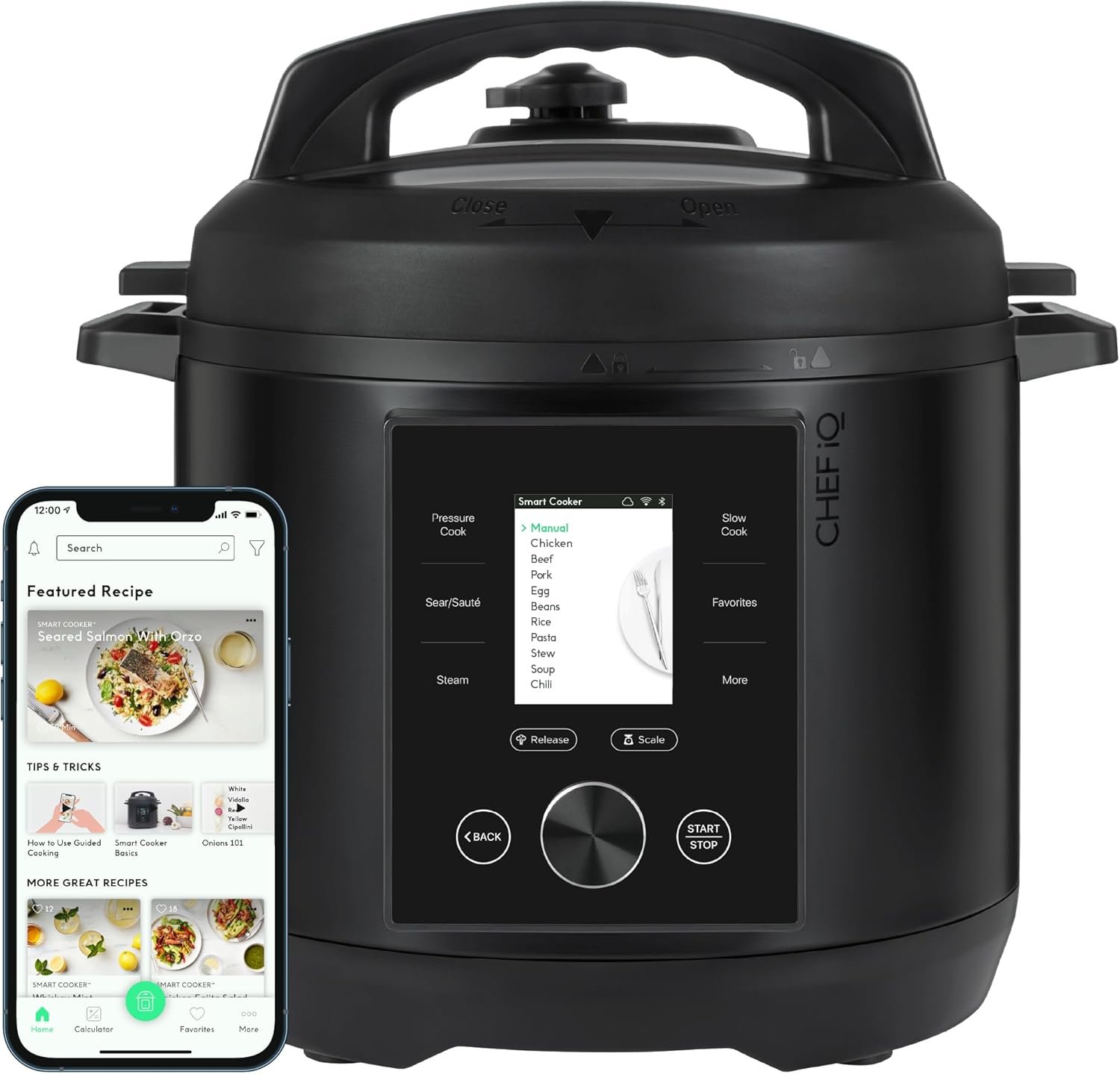
The CHEF iQ Smart Pressure Cooker is designed for kitchens where one appliance needs to do more than one job. Its black body, digital controls and compact upright shape give it a modern, purposeful look, while the built-in scale and guided cooking features aim to take some of the guesswork out of everyday meals.
It is especially appealing as the weather cools and soups, stews, braises and batch cooking start to make more sense again. The trade-off is that this is a more involved appliance than a basic pressure cooker, so the extra technology only earns its place if you will actually use it.
Why it works in a kitchen
The CHEF iQ makes sense in a kitchen where versatility matters more than having a separate appliance for every task. Pressure cooking, slow cooking, steaming and other functions are brought into one compact footprint, which can be useful when cupboard and counter space are already doing a lot of work.
The built-in scale and guided cooking features also make it feel more structured than a conventional multicooker. For someone who likes a little help with timings and quantities, that extra guidance can make weeknight cooking feel more predictable without turning the kitchen into a collection of gadgets.
What it feels like to use
The cooker has a dense, substantial countertop presence, with the dark finish and digital control panel giving it a more technical feel than a traditional pressure cooker. The integrated scale should make ingredient prep feel a little more contained, with fewer separate tools needed on the worktop.
The guided cooking system is likely to appeal most to someone who prefers clear prompts rather than constantly checking timings. Day to day, that can make the appliance feel reassuringly structured, though there is still more to learn here than with a simple one-function cooker.
The drawbacks
The biggest compromise is complexity. The CHEF iQ offers a lot of guidance and several cooking modes, but that also means more menus, more settings and more features to understand than with a basic pressure cooker. If you prefer simple controls, some of that intelligence may feel unnecessary.
It is also a fairly substantial appliance, so it needs proper counter or cupboard space. In a smaller kitchen, its footprint can feel more noticeable than the promise of replacing several other tools suggests.
The built-in scale and app connectivity are useful only if they become part of your routine. If you rarely use guided recipes or prefer cooking by instinct, those features may end up feeling like extras rather than essentials.
Finally, a multicooker still needs regular cleaning around the lid, sealing ring and inner pot. The more often you use it for rich sauces, stews and pressure-cooked meals, the more important that maintenance becomes.
Who it suits best
The CHEF iQ suits households that cook regularly and like the idea of one appliance handling several different jobs. It is especially useful for batch cooking, soups, stews and other cooler-weather meals where pressure cooking or slow cooking can save time.
It is less suitable for very small kitchens, occasional cooks, or anyone who prefers simple manual controls. If you already own several dedicated appliances that you use happily, the extra versatility may be less valuable.
Is it worth the counter space?
The CHEF iQ makes the strongest case when you will genuinely use its mix of pressure cooking, slow cooking and guided recipes throughout the week. The built-in scale and app support add structure, while the single-appliance format can help reduce the need for several separate countertop tools.
The compromise is that all of that versatility comes with a learning curve and a fairly noticeable footprint. If you enjoy the extra guidance, it can earn its place. If you prefer simple, instinctive cooking, a more basic multicooker may suit you better.