Philips Hue Lily Outdoor Spotlights for the Garden
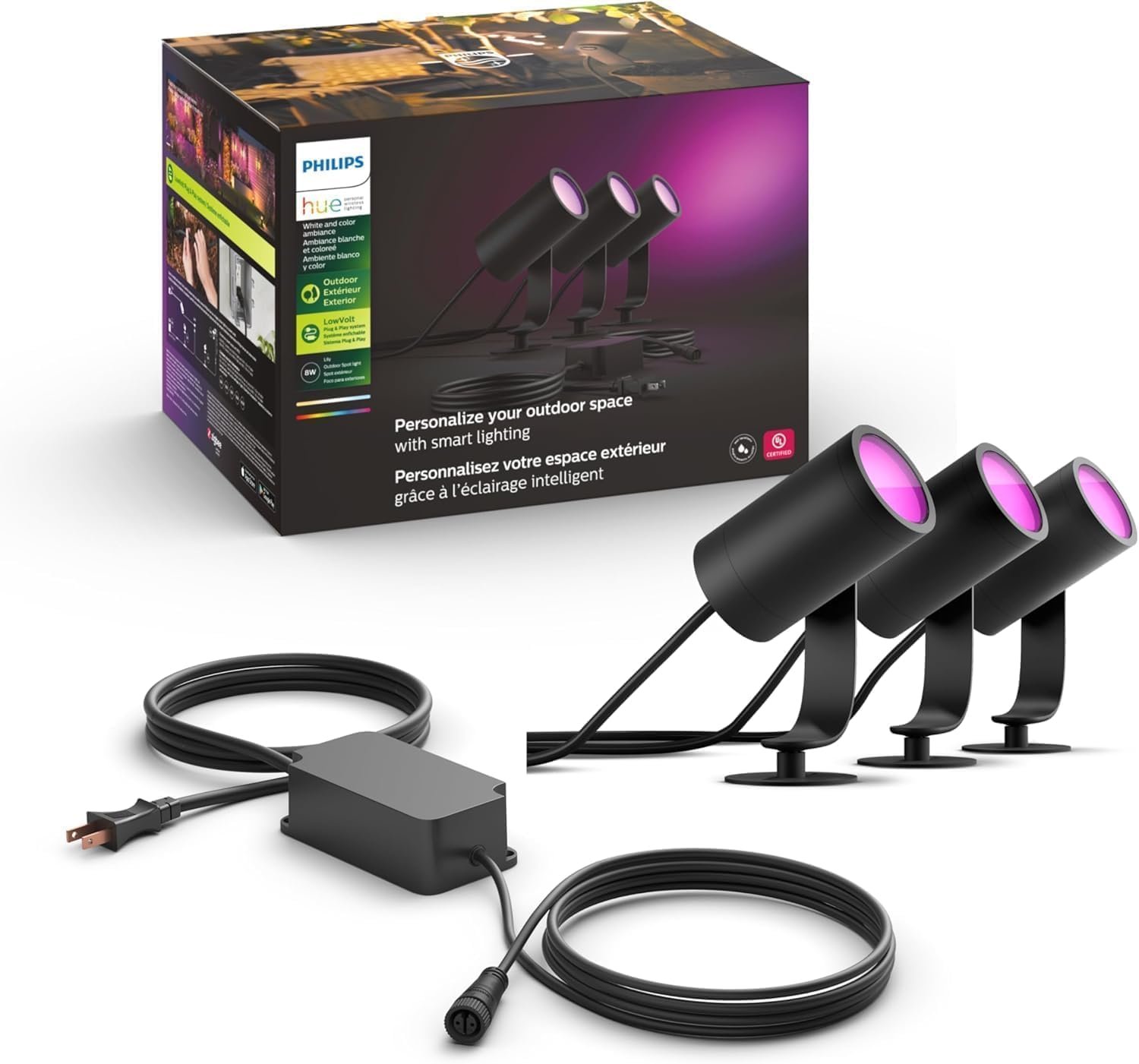
Garden lighting works best when it feels considered rather than scattered. The Philips Hue Lily outdoor spotlights are designed to pick out planting, paths and architectural details with focused light instead of simply flooding the whole space.
The three-light set has a clean black finish and enough flexibility to create different pools of light around the garden, while the smart controls make it possible to shift from warm white to cooler tones or colour when the mood calls for it.
As an Amazon Associate, I earn from qualifying purchases.
Why it works in a garden
The Lily spotlights work well in a garden because they let you shape the light rather than simply add brightness. Each fitting can be aimed towards a tree, wall, path or planting bed, which helps create depth and makes the garden feel more considered after dark.
The black housings are restrained enough to disappear into planting during the day, while the low-voltage setup keeps the system relatively tidy. Used in a group of three, the lights can create a more balanced scheme than a single bright fitting placed in one corner.
What it feels like to use
The fittings have a compact, solid feel, with matte black housings that look more like small architectural lights than decorative garden accessories. Once positioned, they sit quietly among planting and let the light do most of the visual work.
In use, the real appeal is control. You can keep the light warm and subtle for everyday evenings, brighten paths when needed, or introduce colour without changing the fittings themselves. That flexibility makes the system feel more considered than a fixed-colour spotlight.
Because the lights are directional, small adjustments in angle can noticeably change how a tree, wall or planting bed looks after dark.
The drawbacks
The main compromise is that the Lily system works best when you are comfortable with smart lighting. To get the full range of scheduling, automation and remote control, it makes most sense as part of a Philips Hue setup rather than as a completely standalone garden light.
The fittings also need thoughtful positioning. Because they are directional, poor placement can leave one area overlit while another still feels flat, and the low-voltage cabling needs to be planned so it does not become visually distracting.
These are modern-looking fittings too. The matte black finish is restrained, but the overall design may feel too technical in a very traditional or cottage-style garden.
And while three spotlights give useful flexibility, they may not be enough for a large garden. Someone with a bigger plot could easily find themselves needing additional lights to achieve a balanced scheme.
Who it suits best
The Philips Hue Lily spotlights suit a garden where lighting is part of the design rather than just a practical afterthought. They work particularly well around planting, pathways, trees and architectural features that benefit from focused light.
They will appeal most to someone who already uses, or is happy to use, the Philips Hue ecosystem and wants flexible control over brightness, colour temperature and mood.
If you prefer simple plug-in lighting with no app or smart-home setup, or your garden has a very traditional style, a more basic fixed-light system may be the better fit.
Is it worth making room for?
If you want garden lighting that feels more architectural than decorative, the Philips Hue Lily set makes a convincing case. The three directional spotlights let you shape the light around planting, paths and walls, while the black housings stay relatively discreet during the day.
The main compromise is complexity. You get the most from these lights when they are part of the Philips Hue system, and the cabling and positioning need a little planning if you want the finished result to look tidy.
For a modern garden where lighting matters after dark, though, the Lily set offers a strong balance of solid build, flexible control and a cleaner look than most basic outdoor spotlights.