Philips SmartSleep Wake-Up Light for Better Mornings
As an Amazon Associate I earn from qualifying purchases.
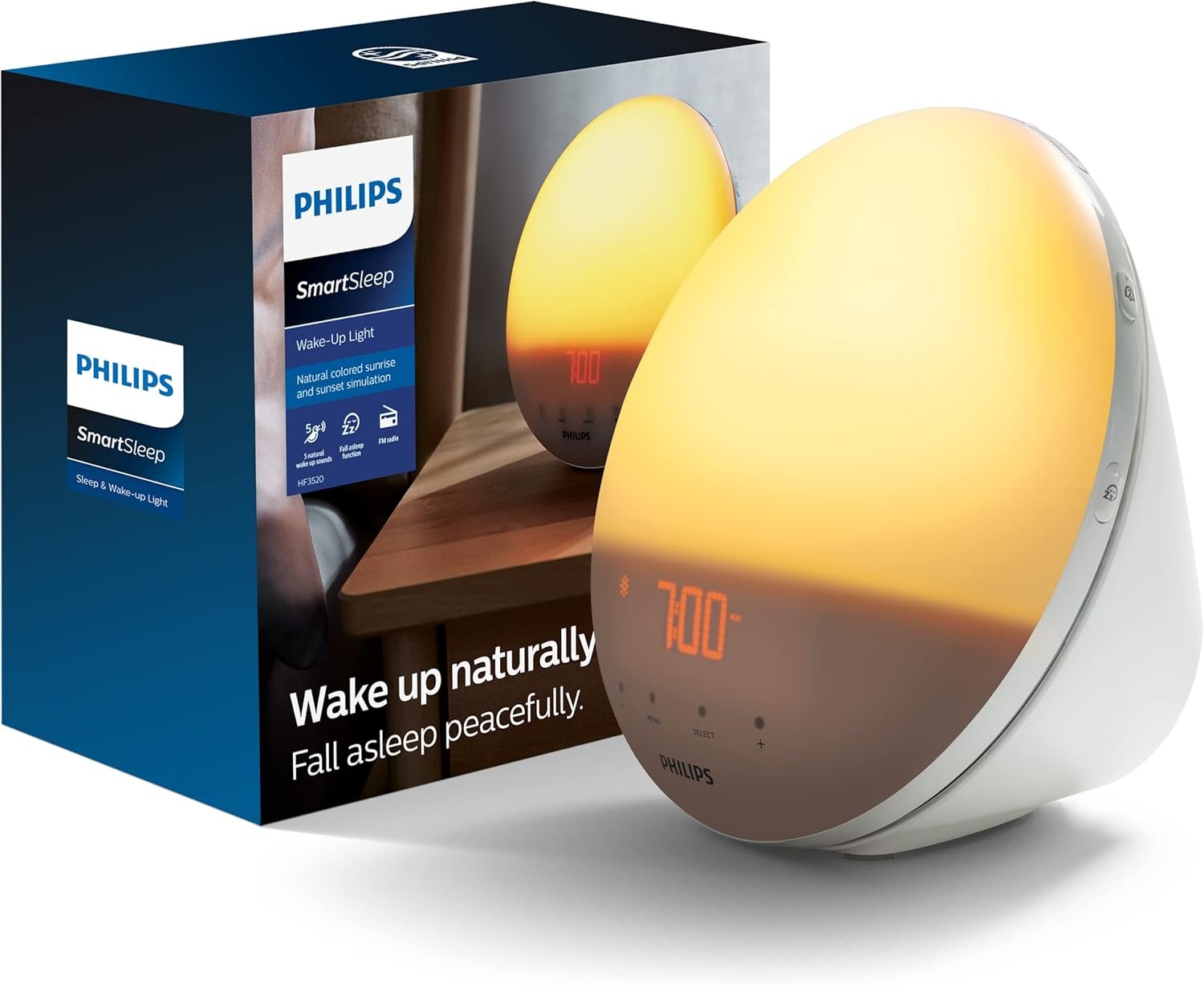
Mornings rarely feel gentle when they begin with a sharp alarm in a dark room. The Philips SmartSleep Wake-Up Light takes a softer approach, gradually filling the bedside area with warm light before the alarm sounds. Its rounded shape gives off a calm, diffused glow rather than a harsh beam, so it feels more like a small pool of sunrise beside the bed than another piece of electronics. It is designed to make waking feel less abrupt while also giving the bedroom a warmer, more considered atmosphere.
Why it works in a bedroom
The Philips SmartSleep earns its place beside the bed because it does more than simply wake you up. The broad circular face spreads light evenly, creating a soft glow that feels warmer and less clinical than a phone screen or standard bedside lamp. As the light gradually brightens, the room changes with it, which can make the transition from sleep to morning feel much less sudden.
It also works well visually. The curved shape is simple and unobtrusive, so it sits comfortably on a nightstand without making the space feel cluttered. During the evening, the warmer light can help the bedroom feel calmer and more settled, while the sunset function gives it a useful role before sleep as well as first thing in the morning.
What it feels like to use
The appeal is in how gradual everything feels. Instead of going from darkness to a blaring alarm in an instant, the Philips SmartSleep begins with a low, warm glow that slowly becomes brighter. The light has a soft, diffused quality, so it feels more like daylight spreading through the room than a lamp being switched on beside your head.
Physically, the unit has enough size and weight to feel settled on a bedside table rather than flimsy or toy-like. The rounded front gives it a smooth, simple presence, and the illuminated face is easy to glance at without dominating the room.
The natural alarm sounds make the experience gentler too. Used together with the rising light, they create a wake-up routine that feels more deliberate and less jarring. The sunset setting works in the opposite direction at night, gradually reducing the light so the bedroom feels softer and quieter as you wind down.
The drawbacks
The biggest compromise is its size. The Philips SmartSleep has a fairly broad footprint, so it can feel substantial on a small bedside table, especially if you already keep a lamp, books, glasses or a phone charger beside the bed. It looks neat, but it is not especially compact.
The controls also take a little getting used to. Because several functions are built into the same unit, changing light levels, alarm settings and sounds is not quite as immediate as using a very simple alarm clock. After a few days it becomes familiar, but the first setup may feel more fiddly than expected.
It also has a distinctly functional look. The smooth white body and circular face are clean rather than luxurious, so anyone building a highly decorative or traditional bedroom may prefer something that looks more like a conventional lamp.
Most importantly, the gradual sunrise effect will not suit everyone equally. Heavy sleepers may still want a stronger backup alarm, while very light sleepers may find the brighter settings more intense than necessary. The strength here is the gentler routine, not brute-force waking power.
Who it suits best
The Philips SmartSleep Wake-Up Light makes the most sense for anyone who dislikes being dragged awake by a harsh alarm or who finds dark mornings particularly difficult. It suits people who want a calmer bedroom routine without turning the bedside table into a collection of separate gadgets.
It is also a good fit for bedrooms where atmosphere matters. The warm light feels softer than a typical digital alarm clock, and because it works as both a wake-up light and an evening lamp, it earns its space rather than simply sitting there waiting for morning.
Couples may appreciate it too, particularly where one person gets up earlier than the other. The gradual light can feel less aggressive than immediately switching on a bedside lamp, although the alarm sound can still be used when needed.
Is it worth the bedside space?
Yes — provided you value a calmer start to the day more than having the smallest possible alarm clock.
The Philips SmartSleep Wake-Up Light feels like a proper bedroom product rather than a gadget you hide away. The warm glow, gradual sunrise effect and evening light give it a useful role at both ends of the day, and that makes the space it occupies on the nightstand easier to justify.
It will suit someone who wants the bedroom to feel more restful and less dominated by phone screens and harsh alarms. The design is simple, the light feels soft and warm, and the overall experience is pleasantly understated.
For a small bedside table, though, its size is the main thing to consider. If space is already tight, it may feel bulky. But if you have the room and like the idea of waking more gently, this is the sort of product that can become part of the bedroom routine rather than just another object on the furniture.